



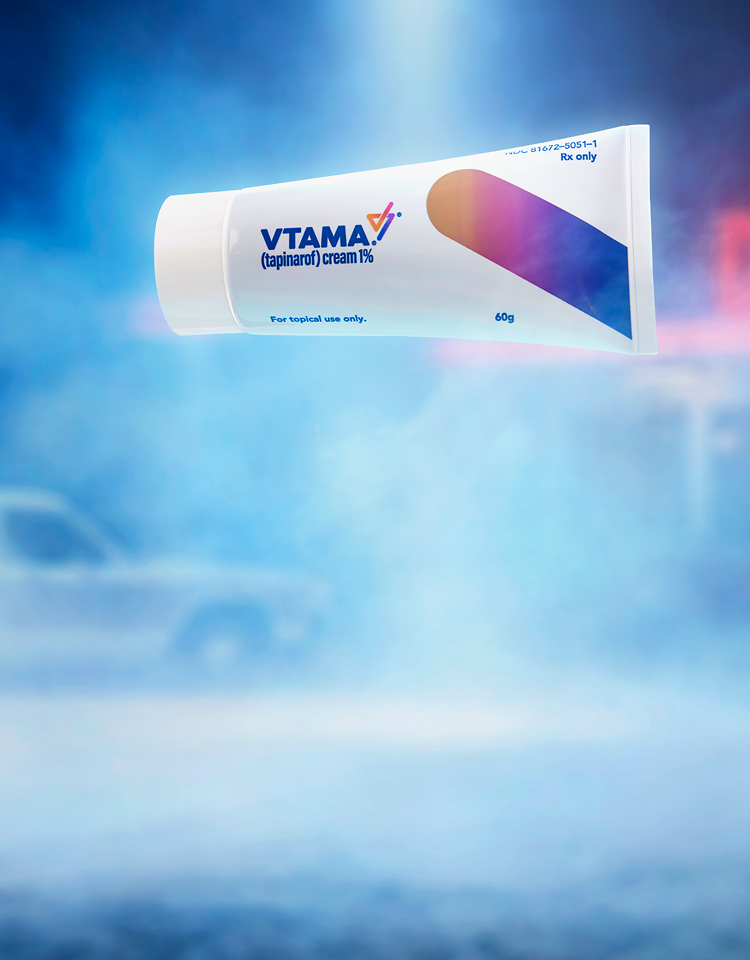
Helpful resources to get your
patients with atopic dermatitis
started with VTAMA cream
Eligible commercially insured patients may pay as little as $0.*
VTAMA is approved for use in patients as young as 2 years of age with mild, moderate, or severe atopic dermatitis.
The MyVTAMA savings card may be used at any participating pharmacy location in the United States and Puerto Rico. Commercially insured patients may pay as little as $0 and no more than $35.*
*Eligibility required. This offer is invalid for patients whose prescription claims are eligible to be reimbursed, in whole or in part, by any governmental program.

This brochure is a quick and concise guide to VTAMA for your patients or caregivers of patients 2 years of age or older with atopic dermatitis.

Give eligible commercially insured patients the MyVTAMA savings card.

A customizable ready-to-use template to help appeal coverage denials for VTAMA.
Download
A customizable template to support coverage by outlining the clinical rationale for VTAMA.
Download
VTAMA is a once-daily, steroid-free, prescription topical treatment for atopic dermatitis in patients down to 2 years of age. It is also indicated for adults with plaque psoriasis. It is a first-in-class topical aryl hydrocarbon receptor (AhR) agonist that was approved for adult plaque psoriasis by the FDA in May 2022 and for atopic dermatitis in adults and patients 2 years old and older in December 2024.1
VTAMA is a steroid-free topical treatment indicated for patients down to 2 years of age with atopic dermatitis. It is also approved for adults with plaque psoriasis.1
VTAMA should be stored at 20 °C to 25 °C (68 °F to 77 °F), with excursions permitted between 15 °C and 30 °C (59 °F and 86 °F).
VTAMA should be kept out of reach of children.
It should not be frozen or exposed to excessive heat.
VTAMA is a well-tolerated treatment option for atopic dermatitis in patients down to 2 years of age with no restrictions on topical external use to affected areas. It can even be used on sensitive skin areas, including the face, neck, underarm, under the breast areas, genital area, and gluteal cleft. VTAMA is not for oral, ophthalmic, or intravaginal use.2
Learn more about tolerability of VTAMA here.
A thin layer of VTAMA should be applied only to the affected areas once daily. Avoid applying VTAMA to unaffected areas of skin.
After applying VTAMA, patients should wash their hands (unless the affected area is on the hands). If someone else helps apply it, they should wash their hands when finished.
VTAMA is not for oral, ophthalmic, or intravaginal use.
In clinical studies, the most common adverse reactions (occurring in ≥1% of patients with atopic dermatitis in both pivotal 8-week studies) were upper respiratory tract infection, folliculitis, lower respiratory tract infection, headache, asthma, vomiting, ear infection, pain in extremity, and abdominal pain.
You can learn more about the safety profile of VTAMA here.
VTAMA was studied in 2 identical 8-week pivotal studies as well as a 48-week, open-label, long-term extension study.1
The pivotal studies (ADORING 1 and ADORING 2) were double-blind, vehicle-controlled studies in more than 800 patients down to 2 years of age with moderate to severe atopic dermatitis.1
The open-label, long-term extension study (ADORING 3) was designed to evaluate the safety and efficacy for 48 weeks. This study included mild, moderate, and severe patients from ADORING 1, ADORING 2, and the MUPK study, as well as patients who were directly enrolled.3
You can learn more about the efficacy of VTAMA here.
VTAMA was not studied in patients who were pregnant or breastfeeding. There are insufficient data available to evaluate drug-associated risks of major birth defects, miscarriage, or other maternal or fetal outcomes. No data are available regarding the presence of tapinarof in human milk or the effects of tapinarof on breastfed infants or on milk production.
AhR is a ligand-dependent transcription factor that is present in several tissues of the body, including the skin.4
Activation of AhR by tapinarof may help:
The specific mechanisms by which VTAMA exerts its therapeutic actions are unknown.
Organon is committed to making our medications accessible and affordable. With the MyVTAMA savings card, commercially insured patients may pay as little as $0 and no more than $35.*
Additional resources, including the Patient Brochure, are available to help patients get the most out of their treatment.
*Eligibility required. This offer is invalid for patients whose prescription claims are eligible to be reimbursed, in whole or in part, by any governmental program.

INDICATION: VTAMA® (tapinarof) cream, 1% is an aryl hydrocarbon receptor (AhR) agonist indicated for the topical treatment of atopic dermatitis in adults and pediatric patients 2 years of age and older.
SELECTED SAFETY INFORMATION
Adverse Events: In atopic dermatitis, the most common adverse reactions (incidence ≥1%) were: upper respiratory tract infection, folliculitis, lower respiratory tract infection, headache, asthma, vomiting, ear infection, pain in extremity, and abdominal pain.
INDICATION: VTAMA® (tapinarof) cream, 1% is an aryl hydrocarbon receptor (AhR) agonist indicated for the topical treatment of atopic dermatitis in adults and pediatric patients 2 years of age and older.
SELECTED SAFETY INFORMATION
Adverse Events: In atopic dermatitis, the most common adverse reactions (incidence ≥1%) were: upper respiratory tract infection, folliculitis, lower respiratory tract infection, headache, asthma, vomiting, ear infection, pain in extremity, and abdominal pain.
Before prescribing VTAMA cream, please read the Prescribing Information.

